
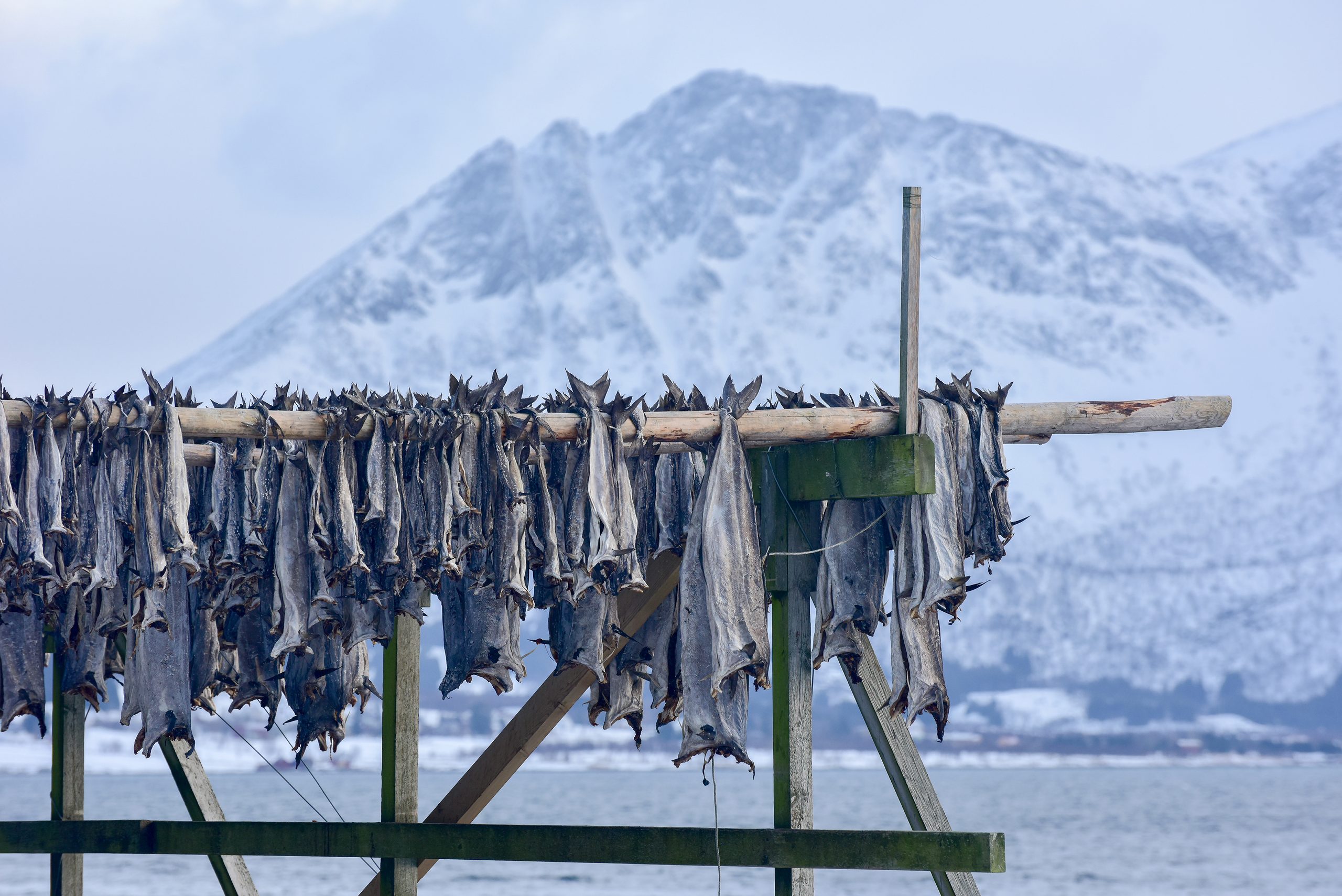
Somewhere on our tour you will meet a piece of fish that is pale, hard as a board, and could probably outlast all of us. That is stockfish, and it is not a gimmick. It is Norway’s oldest export, a food that built towns, crossed oceans, and still turns up on dinner tables thousands of miles from here. So what actually is it?
So, what is stockfish?
Stockfish is cod, dried in cold air and wind on wooden racks until most of the water is gone. No salt, no additives, no smoke. Just fish, weather, and time. That is the part people get wrong: stockfish is not salt cod. Salt cod (klippfisk, the bacalao you see in Portugal and Spain) is salted before it dries. Stockfish is simply hung up in the Arctic air, and the cold does the rest.
By the time it comes down off the racks, around 70 to 80 percent of the water has evaporated. Everything that makes the fish good is still there, just concentrated, which is why stockfish is one of the richest sources of protein you can carry in a bag. And it keeps for years.
How it is made
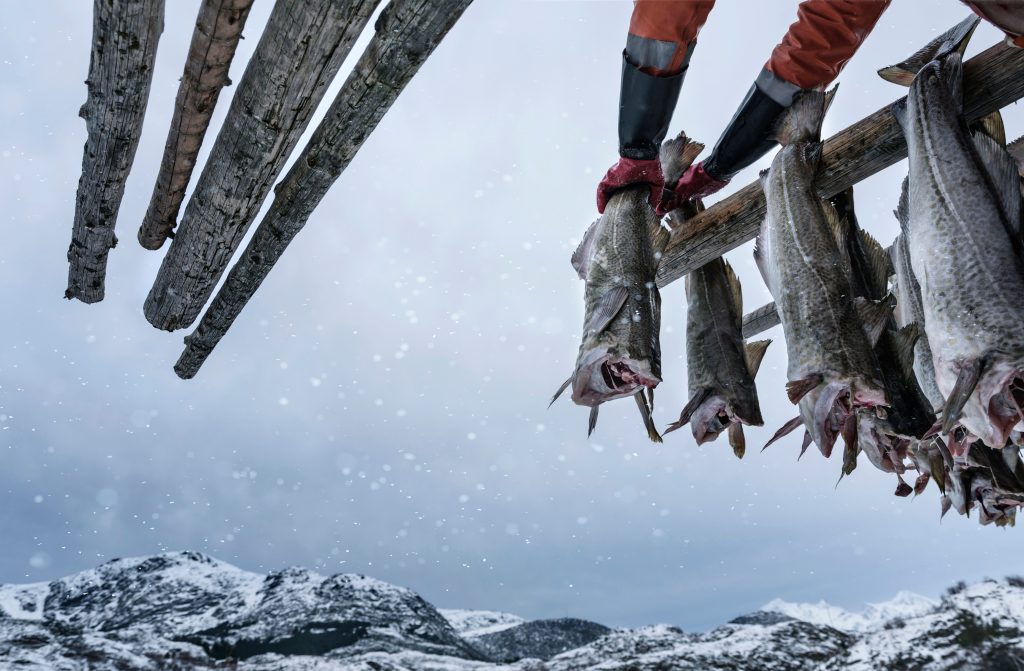
Every winter, Arctic cod, the skrei, swims down from the Barents Sea toward the coast to spawn. The fish is caught, gutted, tied together in pairs by the tail, and hung over wooden racks the Norwegians call hjell. Then it waits.
The weather has to be just right. Cold enough to keep insects and rot away, but not so cold the fish freezes and the ice ruins the flesh. That narrow window is exactly what the far north of Norway offers from about February onwards. After a few months on the racks the fish comes indoors to finish drying in a cool, airy space. It is slow, patient work, and the weather of each season leaves its mark, so no two years turn out exactly the same.
Up here, people will tell you the smell drifting off the drying racks is the smell of money.
The fish that powered the Vikings
Long before it ever reached Italy, stockfish was already crossing the sea. The Vikings worked out that you could hang cod in the cold air, let it dry hard, and carry it for months without it spoiling. That made it the perfect food for long voyages and raids, and the perfect thing to trade. The oldest written mention reaches back to a chieftain shipping dried fish from the Norwegian coast over to Britain around the year 875, and from the Viking Age right through the Middle Ages, stockfish was one of the main things Norway sold to the world. Light, tough and full of protein, it was Arctic cod turned into currency.
By the medieval period the wharfs at Bergen had grown into a great marketplace, where stockfish from the far north changed hands and made fortunes. A dried fish helped fund cathedrals. For centuries it was simply Norway’s oldest export, and it still is, traded longer than anything else the country sells.
Centuries later, Italy got its turn
The most famous chapter came much later, and by accident. In 1432 a Venetian merchant named Pietro Querini was shipwrecked on Røst, a tiny island out in Lofoten. He spent the winter with the locals, and when he finally went home he took stockfish with him. Italy fell for it, and never really stopped. To this day Italy is one of the biggest buyers of Norwegian stockfish, where it becomes dishes like baccalà alla vicentina. It is also loved in Nigeria and Croatia. A hard, frozen-looking fish from the top of the world, treated as a delicacy on Mediterranean tables.
What does it taste like, and how do you eat it?
Deeply savoury, properly fishy in the good way, all that concentrated umami. Most of the world soaks it in water for a few days to bring it back to life, then cooks it like fresh fish. In Norway it is also eaten as dried flakes, snapped off and chewed like crisps, and it is the starting point for lutefisk. On our tour we serve it plain, because the whole point is to taste the fish itself, not a sauce.
Taste it for yourself at Bruket
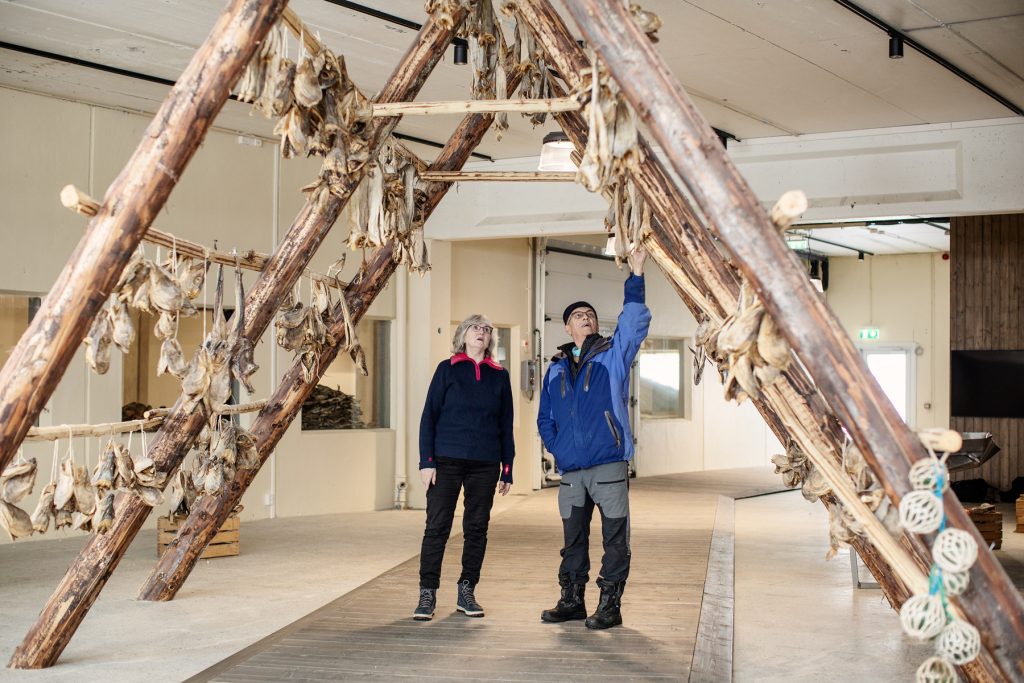
Reading about it is one thing. Standing in a working fish factory and tasting it is another. On every tour you try stockfish alongside king crab and Norwegian caviar, three tastes of the coast straight from the source. Have a look at the full tasting menu, and if you want to take some of that thousand-year-old history home with you, you will find stockfish in our gift shop.
Come and taste it for yourself
A 45-minute fish factory tour with the people who work here, tasting included. From 599 NOK.